



Introduction
The first ping lands before sunrise. Muscle memory takes your thumb to the notification stack even with one eye still shut. Coffee, scroll, tabs, nibble at your keyboard, scroll again. By night, your brain hums like a live wire; sleep shows up late and restless. You promise yourself—tomorrow you’ll be better. I’ve lived that loop. Most of us have, particularly since 2020 when home and work fused and our screens swallowed the seams between them. If you’re reading this, you’re likely done with chasing calm and never catching it. You want something steadier. Durable, not delicate. Give it seven days—not to disappear into a monastery, but to reset a nervous system that’s been sprinting a marathon without water breaks.
You may think you’re too far gone. You’re not. When I called Dr. Sarah Chen, a clinical psychologist who works at the intersection of attention and anxiety, she didn’t blink:
“Your brain isn’t broken; it’s overloaded. When you lower the intensity of inputs, the brain rebalances surprisingly fast.”
— Dr. Sarah Chen, Clinical Psychologist
That’s the point of this 7-day reset: lighten the load, retrain the defaults, and keep a few simple rituals that make calm your baseline rather than a vacation.
Why a week? Because our brains adapt quickly—sometimes mercifully so. Dopamine, the neurotransmitter that underpins learning and motivation, spikes in the presence of unpredictable rewards. That “pull to refresh” loop is a slot machine in your pocket. It’s not character weakness; it’s wiring. The National Institute on Drug Abuse has long described dopamine’s role in cue-driven reward learning; when your brain predicts a hit, it keeps scanning for the next one (NIDA). A short, deliberate break from high-intensity stimulation quiets that chase and lets everyday life register as rewarding again. And yes, there’s precedent: a 2021 Pew survey suggested many Americans tried “digital detox days” during the pandemic, not as a stunt, but as triage.
Table of Contents
Key Takeaways
- Reduce high-intensity digital inputs to let your brain’s reward system rebalance.
- Protect sleep, move daily, and design your environment to support deep focus.
- Use breath, mindfulness, nature, and real connection to downshift your nervous system.
- Simple systems and identity-based habits make calm durable, not delicate.
- Seven days is enough to reset your baseline and build momentum.
Day 1: Declutter the noise, fast from friction
Why it works
- Your nervous system sits on alert after months (years?) of pings and red badges. Reducing variable rewards lowers arousal and helps dopamine signaling settle.
- Small wins matter disproportionately. Early momentum nudges self-efficacy—the quiet belief that you can, in fact, do this.
How to do it today
- Audit alerts. Turn off every non-human notification. Keep calls, calendar, and messages from actual people. The rest lives in pull, not push.
- Grayscale your phone. Stripping color blunts the casino sparkle of icons.
- Create a “home screen zero.” Page one gets only phone, messages, maps, and camera. Everything else sits in a single folder on page two.
- Set two “dopamine detox” windows for the next week: 8 pm–10 am and one 60-minute mid-day block with no social, no news, no short-form video.
- Baseline your screen time. Check your stats and write the number down. We’ll revisit on Day 7.
Mini case: When Maya, 28, was clawing through a divorce, nights spiraled into TikTok until 2 am. On Day 1 she flipped her phone to grayscale and exiled social apps from page one. “It felt silly,” she told me. “But I went from two hours at night to twenty minutes, and it didn’t feel like a fight.” My take: friction is underrated medicine.
Day 2: Guard sleep like a ritual, not a reward
Why it works
- Sleep is the master switch for mood, focus, and impulse control. The CDC recommends at least 7 hours; skimping amplifies stress, anxiety, and disease risk (CDC).
- Evening blue light suppresses melatonin and shifts your circadian clock, delaying sleep onset and fragmenting rest (Harvard Health).
How to do it tonight
- Anchor two times: wake-up and lights out. Protect a 7.5–8.5 hour window without negotiating against yourself.
- Power down screens 60 minutes before bed. If you must use them, switch to warm filters and the dimmest setting you can tolerate.
- Cool, dark, quiet. Think 60–67°F and blackout-level dark.
- Do a “worry download.” Two minutes with a pen: dump what’s buzzing; promise to revisit tomorrow.
- Keep caffeine under 400 mg/day and none after 2 pm. Overdoing caffeine jacks anxiety and fragments sleep (Mayo Clinic).
“If you want calm, stop treating sleep as negotiable. One week of consistent timing and darker evenings stabilizes your nervous system faster than any hack.”
— Dr. James Patel, Sleep Physician
Day 3: Move your body to quiet your mind
Why it works
- Physical activity reduces anxiety and stress and brightens mood via endorphins and neural growth factors (Harvard Health).
- The WHO suggests 150–300 minutes of moderate activity a week; brief “movement snacks” count (WHO).
How to do it today
- Stack three 10-minute walks: after breakfast, after lunch, after dinner. Morning light + post-meal movement steadies circadian rhythm and blood sugar.
- Add one 15-minute strength circuit: push-ups or wall push-ups, squats or chair stands, and a plank. One minute on, 30 seconds off. Strength dampens stress and supports sleep.
- Bookend with breath. After the last walk, sit for 3 minutes. Inhale 4, exhale 6, repeat. Longer exhales cue the parasympathetic brake (Mayo Clinic).
Mini case: Jon, 32, a product designer, swore there was “no time.” We scanned his calendar and found three 12‑minute gaps between meetings. He reserved them as “Walk the block.” By day five, his 3 pm anxiety dip had softened to a shrug. My bias: if it isn’t on the calendar, it rarely exists.
Day 4: Architect your attention like a craftsperson
Why it works
- Multitasking is just rapid task-switching. Each switch taxes working memory and spikes errors and stress. Chronic fragmentation breeds that jittery, never-done feeling (APA).
- Design beats discipline. When the environment favors focus, you need less willpower to show up.
How to do it today
- Choose one deep-focus block: 50–90 minutes, earlier if you can. Phone in another room. One tab. One task. A timer you can trust.
- Try a Pomodoro ladder: 25 on, 5 off; after three rounds, step away for 20 minutes—walk or rest. The cadence interrupts “just a second” doomscrolls.
- Close the loop. End by writing what you did and the very next step. That micro-closure stops anxiety from leaking across the day.
- Do a desk reset. Only the notebook, pen, and the tool for the current task stay visible. Visual clutter is cognitive clutter.
“If your phone is in view, your calm is on lease. The brain reserves attentional tax for potential pings. Out of sight isn’t a slogan—it’s neuro‑economics.”
— Dr. Elena Ruiz, Cognitive Neuroscientist
Day 5: Train your nervous system to return to baseline
Why it works
- Mindfulness and breath practices reduce stress and anxiety and can support sleep and pain management across populations (NIH/NCCIH).
- Gratitude journaling correlates with higher well-being; a few lines a week can lift mood and reduce depressive symptoms (Harvard Health).
How to do it today
- The 6‑minute reset. Sit. Inhale through your nose 4 seconds, hold 2, exhale 6–8. Three minutes. Then a two-minute “5‑senses check‑in”: name one thing you see, hear, feel, smell, taste. Finish with one minute of stillness.
- Start a one‑line journal. Each evening: one win, one gratitude. Keep it short so the habit can outlast your busy days.
- Micro‑meditations on the hour. When your top‑of‑the‑hour chime sounds, take three slow breaths. Repetition trains your body to downshift on cue.
Opinion, plainly: breath work is the cheapest, fastest lever most of us refuse to pull until we’re desperate.
Day 6: Rebalance with nature and real connection
Why it works
- Time in green spaces is linked with lower stress, improved mood, and attention restoration (Harvard Health).
- Strong relationships track with better health and longevity across decades of data (Harvard Health).
How to do it today
- A 20‑minute green break. Park, tree‑lined street, backyard—no headphones. Let your senses stretch.
- Reach out to one person. Call, walk, or share a meal with devices off the table. Human voices do something screens can’t.
- Add plant life where you live. A desk plant or windowsill herbs are small, steady nature cues.
Mini case: Lila, 26, felt calmer after workouts but jittery again by late afternoon. She added a 20‑minute park walk without a podcast. “It was weird at first,” she said, “but by day three the noise in my head turned down.” The Guardian reported in 2022 that even small urban green patches can deliver outsized benefits. It tracks.
Day 7: Lock in your calm living lifestyle with simple systems
Why it works
- Stress multiplies when life is a string of open loops and micro-decisions. Closing loops and simplifying inputs trims decision fatigue and saves attention for what matters (APA).
How to do it today
- Run a one‑hour weekly review. Inbox to zero or “to next.” List open loops. Decide the next physical action for each, then schedule or drop it.
- Set two daily screenless anchors for the coming week—say, 7–8 am and 8–9 pm. Treat them like standing appointments with your nervous system.
- Build your “calm stack” card. On a small card or in notes, write: Sleep window, Walk x3, Deep focus block, 6‑min reset, Green break, One‑line journal. This is your minimalist blueprint.
- Revisit Day 1’s screen‑time number. Note the change. Celebrate briefly, then move on.
“Habits stick when they match who you believe you are. When you say, ‘I’m someone who builds a calm life,’ you make different micro‑choices in moments that used to derail you.”
— Dr. Sarah Chen, Clinical Psychologist
Troubleshooting the week
- If cravings spike: Remember the biology. Novelty hits dopamine. Stand up, drink water, do 10 squats, then one minute of 4–6 breathing. Move first; the mind follows.
- If boredom terrifies you: That’s part of the work. Boredom isn’t failure; it’s withdrawal from overstimulation. On the other side is depth. Stash a book or sketchpad where you usually scroll.
- If you “need” social for work: Set office hours for platforms and batch posting and replies. Use site blockers outside those windows.
- If you miss a day: Don’t stack shame. Reset at the next anchor. The only rule is return. Consistency beats perfection; it always has.
What this really is: a dopamine reset grounded in life
Some call it a dopamine detox. In plain science, it’s a week of turning down high‑intensity, variable‑reward inputs while turning up steady, healthful ones—sleep, movement, nature, human connection. NIDA’s work on reward makes the why clear: cut constant hits and the brain’s reward system re-sensitizes to ordinary pleasures (NIDA). The result isn’t asceticism. It’s better taste—you stop needing louder stimuli to feel okay. I’d argue that’s the real luxury now.
Your 7-day snapshot, reframed
- You cleared the loudest noise.
- You reclaimed sleep, the foundation of a calm living lifestyle.
- You moved enough to metabolize stress.
- You designed for deep focus instead of wishing for it.
- You taught your body to downshift on command.
- You remembered you’re a mammal who needs trees and people.
- You installed simple rituals that keep paying you back.
Beyond the week: keep it light, keep it human
- Think seasonally. Every 6–8 weeks, run a 48‑hour “intensity fast” from social feeds and short‑form video. Maintenance for your nervous system.
- Upgrade inputs. Follow fewer, better sources. Choose long‑form over micro‑bursts; your attention deserves its full meal.
- Make pleasure real. Cook, craft, read, host simple dinners. Let your reward system re-anchor to embodied life.
The Bottom Line
Calm isn’t a miracle; it’s a design. Trim noisy inputs, guard sleep, move a little, breathe often, and choose depth over dopamine fireworks. In seven days you can reset your baseline—and keep building a calm living lifestyle that lasts.
Image suggestion
References
- CDC – Sleep and Sleep Disorders: Sleep and Sleep Hygiene
- CDC – Sleep and Sleep Data and Statistics
- Harvard Health – Blue light has a dark side
- Harvard Health – Exercising to relax
- Harvard Health – The health benefits of the great outdoors: Nature helps
- Harvard Health – The health benefits of strong relationships
- Harvard Health – Giving thanks can make you happier
- Mayo Clinic – Caffeine: How much is too much?
- Mayo Clinic – Relaxation techniques: Breath focus
- NIH/NCCIH – Mindfulness Meditation: What You Need To Know
- NIDA/NIH – Drugs, Brains, and Behavior: The Science of Addiction (Dopamine and reward)
- WHO – Physical activity: Key facts
- APA – Multitasking: Switching costs
- APA – Stress effects on the body
Closing
Seven days won’t erase stress. Life keeps showing up. But a week is enough to reset your baseline and prove that a calm living lifestyle isn’t fantasy—it’s a set of repeatable, human‑scale choices. Keep your anchors. Protect sleep. Move a little, breathe a lot, choose depth over dopamine fireworks. Watch how ordinary days start to feel spacious again.
Summary and next step
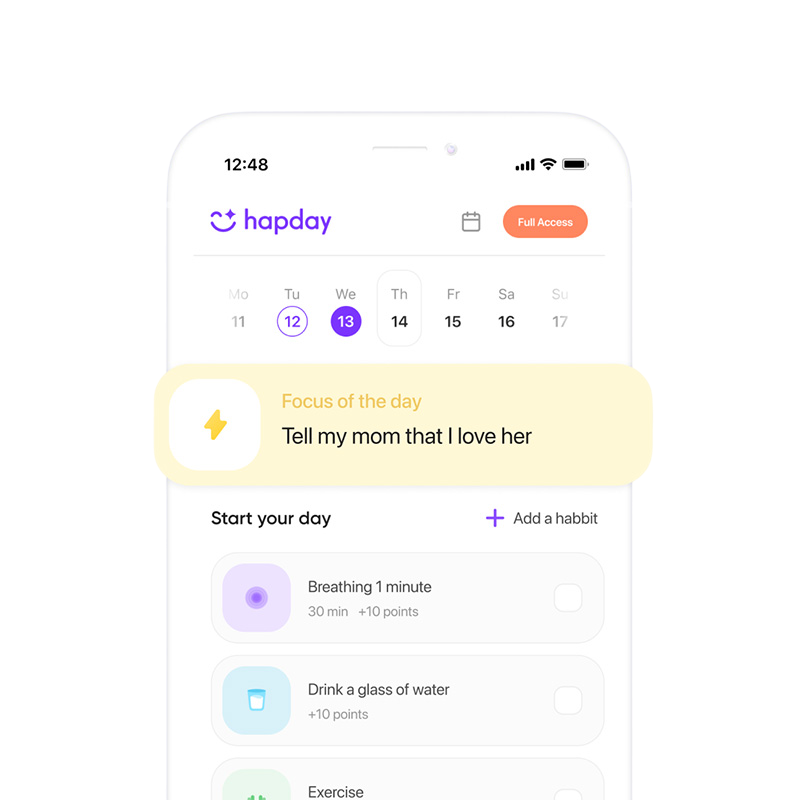
You just read a practical, research‑rooted way to build a calm living lifestyle in one focused week—by trimming noisy inputs, protecting sleep, moving daily, designing for deep focus, practicing breath and mindfulness, and leaning on nature and real connection. Want help staying consistent? Bold CTA: Download Dopy – Dopamine Detox App for Pomodoro focus, habit tracking, and smart reminders.