



Table of Contents
- Deciphering Overstimulation
- The Mechanics of Deep Focus
- Unlocking Your Capacity for Deep Focus
- A Balanced Approach to Enhanced Focus
- Progress with Clarity and Intent
- The Bottom Line
- References
Picture it. You’re at your workstation, eager to get that project completed, and yet, your thoughts are scattered in every direction. Ping—a Slack message here. Buzz—a text there. A YouTube tab calling out with its irresistible array of bingeable series. Relatable scenario? You’re in good company. In our ultra-networked world, our minds rarely find peace, leaving the notion of deep focus feeling almost mythical.
Take Maya, 28, for example. Her turning point came after a challenging divorce, leaving her once steadfast concentration shattered by the relentless hum of digital interruptions.
“I found myself relying on muscle memory, just habitually reaching for my phone even when it wasn’t necessary.”
— Maya, 28
For her, and countless others, honing deep focus isn’t just a noble pursuit—it’s an essential anchor in the storm.
Deciphering Overstimulation
Overstimulation isn’t just a wellness buzzword—it’s a tangible psychological condition with significant impacts on how our minds function. Back in 2021, a study by the American Psychological Association highlighted how chronic overstimulation floods our cognitive channels, hindering our information processing abilities—and cranking up stress and anxiety.
“Our brains are incredible yet inherently limited in handling sensory input. In today’s age of ceaseless alerts and streams of data, many live in a state of continual cognitive strain.”
— Dr. Sarah Chen, Clinical Psychologist, NYU
Doesn’t it often feel like your attention span’s vanished, your memory’s got gaps, or your creativity’s stifled beyond recognition? You’re not at fault—these are merely signs of overstimulation. And thankfully, they’re reversible.
The Mechanics of Deep Focus
Achieving deep focus—commonly known as “flow”—requires more than sheer determination. Mihaly Csikszentmihalyi, who coined the term “flow,” describes it as being thoroughly engrossed in a task. It’s that sweet spot where creativity blossoms, productivity spikes, and satisfaction soars.
From a neurological viewpoint, immersing in deep focus sees the brain generating gamma waves that synchronize various brain regions, augmenting performance. A Harvard University study indicated that those who consistently engage in focused tasks have more gray matter in their brains, a boon for memory and cognitive abilities.
“Deep focus draws upon the brain’s unique capacity to emphasize task-specific neural routes, ramping up cognitive effectiveness.”
— Dr. Edward Fisher, Neuroscientist, Stanford
Unlocking Your Capacity for Deep Focus
Here are pragmatic approaches to recovering from overstimulation and nurturing deep focus, all scientifically supported.
1. Digital Detox
Exchange disorder for calm by redefining your tech relationship. Initiate a digital detox—deliberately unplug from your devices to recalibrate your neural circuits.
Why it works: Reducing screen time can lower cortisol, the stress hormone. Research from the University of California, Irvine, showed that detaching from screens decreases stress and hones attention.
How to implement: Start with ‘tech-free’ zones—during meals or in the hour before bed works well. Use apps to curb screen usage, gradually extending these intervals. It’s about moderating, not quitting abruptly.
2. Mindful Breathing
Mindful breathing isn’t just a fad; it’s scientifically affirmed as a way to calm the mind and bolster focus.
Why it works: Breathing exercises boost oxygen to the brain and cut physiological stress markers. A National Institutes of Health study showed how mindful breathing significantly energizes the brain’s prefrontal cortex—the hub of strategic thought and decision-making.
How to implement: Practice by inhaling for four seconds, holding for another four, and exhaling for five. Repeat this five times when your focus wanes.
3. Exercising for the Mind
Routine physical activity is a formidable route to refocus and combat overstimulation.
Why it works: Exercise fosters endorphin release and enhances brain health, bolstering memory and concentration. Research from the Mayo Clinic links aerobic activities to growth in the hippocampus, the brain’s memory cornerstone.
How to implement: Dedicate at least 30 minutes daily to aerobic exercise. Whether you prefer jogging, swimming, or dancing is up to you—what matters is enjoyment for consistency.
4. Structured Work Sessions
Fragment your tasks into manageable sessions—popularly known as the Pomodoro Technique.
Why it works: This method aligns with our natural attention span, typically around 25 minutes. Regular breaks help prevent burnout, maintaining high productivity.
How to implement: Work in 25-minute bursts, taking five-minute pauses. After four sessions, take a more extended break. Apps like Dopy can schedule your intervals, keeping you on track.
5. Intentional Rest
At times, stepping back is the key to focusing better. Intentional breaks are fundamental for sustained concentration.
Why it works: The Journal of Applied Cognitive Psychology found that brief mental pauses during prolonged tasks enhance performance by staving off cognitive fatigue.
How to implement: Weave purposeful pauses throughout your day—whether it’s a stroll in the park, a catnap, or an engrossing hobby. Remember, it’s about recharging your mental batteries.
Key Takeaways
- Overstimulation affects cognitive function and mental health, but can be reversed.
- Techniques like digital detox, mindful breathing, and exercise can enhance focus.
- Structured work sessions and intentional rest are essential for maximizing productivity.
- Small adjustments in daily habits can lead to significant improvements in concentration.
A Balanced Approach to Enhanced Focus
Evolving from overstimulation to regaining deep focus isn’t an overnight event—it’s a journey paved with patience and grace. If it’s ever felt like the world’s noise might never dial back, take heart in knowing every small step toward disconnecting is part of quieting that chaos.
“To truly unlock deep focus, craft a setting where distractions are minimal, and the mind can roam productively. It’s about mastering your surroundings, not just your thoughts.”
— Dr. Grace Mitchell, Mindfulness Expert
Consider the journey of people like Maya, who overcame overstimulation by making persistently small adjustments. Her path began with intent—planning her days with elements of digital detox, exercise, and reflection built-in.
“It’s not flawless, but I feel more in control and not at the mercy of every notification.”
— Maya, 28
Progress with Clarity and Intent
Never underestimate the influence of a focused mind—it’s your gateway to transformation and creativity. The strategies you adopt today will tomorrow furnish the resolve needed to cut through life’s distractions. Deep focus lies within reach, poised to be channeled for a remarkable life.
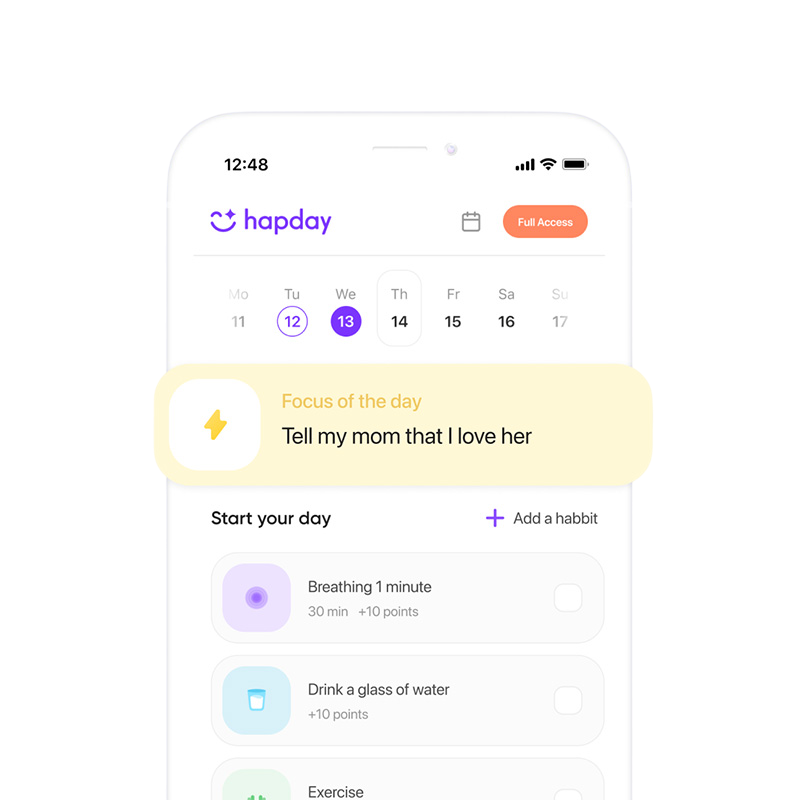
To reinforce this odyssey, explore tools tailored to assist in this transition. Digital aids like Dopy—the Dopamine Detox App—can be invaluable in balancing your pursuit. Equipped with intelligent reminders and habit tracking, it guides you gently toward achieving deep focus and tranquility.
The Bottom Line
Seize control of your cognitive well-being today; embrace these practices with resolve. Every step toward focus is reclaiming the essence overstimulation eroded: your peace, creativity, and potential.
References
- American Psychological Association
- Harvard University
- University of California, Irvine
- National Institutes of Health
- Mayo Clinic
- Journal of Applied Cognitive Psychology