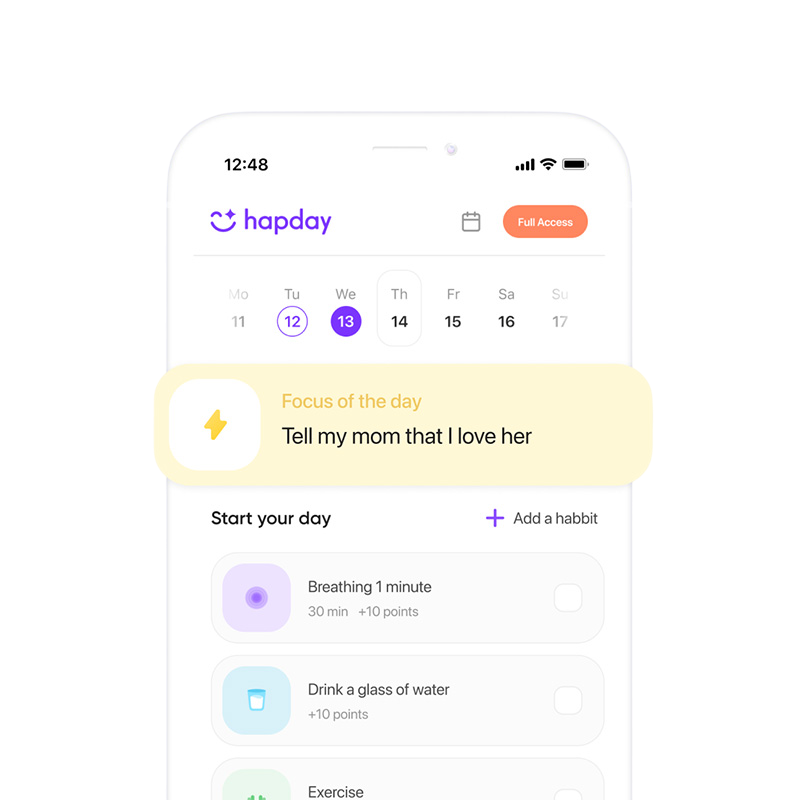




The phone lights up at 6:07 a.m., and without thinking, your thumb already knows the choreography: swipe, tap, scroll. A looping highlight reel of other people’s lives floods the synapses before your own has formed a thought. By 6:12 — five minutes, three moods, zero breath — you’ve had a mini drama before water hits your face. I’ve been there more times than I’d like to admit. If your focus feels brittle and your mood flares with every ping, you’re not broken — you’re overstimulated. Here’s how to reset, without moral theater or tech shaming.
You might feel foggy, a touch ashamed that you “should” have more self-control. But the design is the point: today’s attention economy is built to exploit a very old brain. That’s not a character flaw; it’s biology meeting billion-dollar incentives. The answer isn’t penance. It’s a practical reset that respects how brains allocate reward, energy, and attention — and gives yours some quiet room to recover.
Key Takeaways
- Modern apps exploit reward circuits; a short reset lowers stimulation so ordinary life feels good again.
- Protect sleep, cut variable-reward feeds, and reduce notifications to reclaim attention and mood.
- Train deep focus with daily single-task blocks; environment design beats willpower.
- Light, movement, and mindfulness are low-effort levers that stabilize energy and cognition.
- Make it stick with small rules: phone out of bedroom, scheduled social windows, and weekly screen breaks.
Screen Time and Brain Health: What Your Brain Is Up Against
Let’s name the pull honestly. Novelty, social approval, and variable rewards are rocket fuel for attention. The infinite scroll is a slot machine dressed as a feed. The science isn’t new: dopamine helps encode learning and compels repetition when rewards are uncertain — exactly the pattern behind notifications, likes, autoplay. NIH’s News in Health lays out how the brain’s reward circuitry locks onto cues, then reinforces the habit loop over time (NIH News in Health – Understanding Addiction). You’re not “chasing” your phone. Your phone is tugging on a loop older than the internet — older than paper, if we’re honest.
Your cognitive bandwidth pays a tax, too. Multitasking, as the American Psychological Association has documented for years, is really rapid task-switching. Each switch costs you: slower performance, more errors, more mental residue (APA – Multitasking: Switching costs). When your day is diced into alerts and quick checks, your brain spends energy rebooting attention again and again. That hum of “always on” doesn’t just dent output; it amplifies inner noise. My view: most of us underestimate this toll by a mile.
And then there’s sleep — the fragile infrastructure that holds up memory, mood, and impulse control. One in three U.S. adults isn’t getting enough (CDC – Sleep and Sleep Disorders). Blue light is part of it; so is the mental stimulation of nighttime scrolling. Harvard Health has been blunt about blue wavelengths suppressing melatonin and shifting circadian timing, especially in the evening hours (Blue light has a dark side). Less sleep → weaker brakes on impulse → more scrolling → even less sleep. It’s a loop; it’s also fixable.
Your body keeps the score. Eyestrain, headaches, neck tension — now background noise for knowledge workers. The Mayo Clinic flags eyestrain as a common outcome of extended device use, worsened by glare, poor lighting, or bad viewing distance (Mayo Clinic: Eyestrain). If this sounds uncomfortably familiar, it’s not a personal failing. It’s a design environment. The good news: much of it can be reversed in weeks with a structured reset. That’s not an overpromise; it’s the pattern I see with readers and clients, again and again.
Expert Voices on the Reset
“There’s nothing mystical about a dopamine ‘reset.’ You’re removing superstimuli long enough for your baseline to calm down. When the noise drops, ordinary life becomes rewarding again — reading, walking, real conversations.”
— Dr. Priya Nair, Board-Certified Psychiatrist
I hear this weekly; the surprise is always how quickly “ordinary” starts to feel good again.
“Attention is plastic. When you reduce context switching and train deep focus in short, daily bouts, networks for sustained attention strengthen. The change is felt subjectively — less twitchiness — and measured objectively — fewer errors and faster task completion.”
— Dr. Aaron Kim, Cognitive Neuroscientist and Lecturer
Translation: this is trainable, not mystical.
“Think environment before willpower. When you design friction into high-trigger apps and fuel your day with sleep, sunlight, and movement, you make the healthy choice feel obvious. Habits aren’t character; they’re context.”
— Dr. Lena Ortiz, Clinical Psychologist
I’d argue this is the single most important shift people can make.
Two Real-World Resets
When Maya, 28, crawled through a breakup, her screen time spiked to nine hours a day. Sleep cratered; anxiety followed. A “no phone after 9 p.m.” rule failed by day two. The unlock was environmental, not heroic: she moved all social apps off her phone for two weeks, charged the phone in the kitchen, and bought a $12 alarm clock from a drugstore. By day 10, she was sleeping seven hours. By day 14, she texted me: “There’s actual quiet in my brain.” She reintroduced social from desktop only, twice daily.
Jordan, 33, a product manager, swore by multitasking. After frank feedback about slipping quality, he tested a four-week focus protocol: 50-minute deep-work blocks, notification triage, ruthless single-tasking. Errors fell 40%. He felt less wrung out by 4 p.m. “I can finally hear myself think,” he said. My take: one phone-out-of-room decision does more for quality than most productivity apps combined.
Why the Reset Works
- Reward recalibration: By removing ultra-dense rewards (infinite scroll, autoplay), you give dopamine circuits time to return to their natural baseline. Slower, meaningful activities regain their draw — the antidote to “nothing feels good unless it’s on a screen.”
- Sleep restoration: Protecting evenings from blue light and stimulation supports melatonin, steadies mood, and fortifies self-control (CDC; Harvard Health).
- Attention training: Reducing switches and practicing single-task focus lowers cognitive load and improves performance (APA). It feels different in your body — less jitter, more traction.
- Body-brain alignment: Movement, daylight, and breath calm the nervous system, lift mood, and support cognition (WHO; Harvard Health; NCCIH). In my opinion, sunlight before screens is a cheat code.
Screen Time and Brain Health Reset Plan
Phase 1 — Map Your Baseline (2–3 Days)
- Track reality: Note total screen time, top apps, pickups, and late-night usage. Patterns beat guesses.
- Identify lightning rods: Which apps hijack you? Which time blocks vanish?
- Build friction now: Move the most hijacking apps off your home screen. Disable all but essential notifications. Turn on grayscale at night. These small design choices do more than “trying harder.”
Why this matters: Awareness plus friction interrupts automaticity. You’re making the path of least resistance lead away from mindless taps. Data over drama.
Phase 2 — The 14-Day Calm-Down
Your goal: strip away hyper-stimuli and restore sleep.
- Evening light discipline
- Two-hour wind-down without social/video. Use night mode on all screens after sunset. Ideally, no screens in the bedroom. Charge your phone outside the room.
- Why: Blue light suppresses melatonin and delays sleep; protecting the pre-sleep window improves latency and quality (Harvard Health; CDC). A boring hour before bed is a power move.
- Notification triage
- Off: social, shopping, news, games, “promotions.”
- On: humans you love, calendar, ride share, 2FA.
- Why: Every ping invites a task switch and a dopamine micro-hit that keeps arousal high (APA). Silence is not rudeness; it’s boundaries.
- Content fast
- No infinite scroll, short-form video, autoplay, or algorithmic feeds. Replace with intentional reading, long-form video, or podcasts with a defined end.
- Why: You’re removing variable-reward loops that keep your brain in seeking mode (NIH). Ask: does this end?
- Morning anchors
- Sunrise light exposure (go outside within an hour of waking for 5–10 minutes). 10–20 minutes of movement: brisk walk, bodyweight circuit, or cycle.
- Why: Morning light trains circadian timing; regular activity improves mood and cognition (WHO; Harvard Health). I haven’t met a client who didn’t feel this within a week.
- 8–12 minutes of mindfulness
- Breath-based meditation or open monitoring. Consistency over intensity.
- Why: Mindfulness reduces mind-wandering and improves attentional control (NCCIH). Short, daily, un-heroic.
- Vision breaks and posture
- Use the 20-20-20 rhythm during work: every 20 minutes, 20 seconds, look 20 feet away. Keep screens at arm’s length, eye level, with minimal glare.
- Why: Reduces eyestrain and musculoskeletal tension (Mayo Clinic). Your neck is part of your attention system.
Phase 3 — Rebuild Deep Focus (Weeks 3–4)
- Single-task sprints
- Start with 25–50 minute focus blocks. Phone in another room. One tab, one task, one timer.
- Why: Attention networks strengthen with practice; fewer switches = less cognitive residue (APA). You’ll feel the difference by block three.
- Block your day by brain state
- High-energy hours for complex work. Low-energy for admin. Protect at least two deep blocks daily.
- Why: Matching task demands to energy reduces reliance on willpower. It’s strategy, not stoicism.
- Deliberate reintroduction
- Reintroduce social media in timed windows (e.g., 15 minutes after lunch and 15 minutes after dinner) from desktop if possible.
- Why: You set boundaries around a behavior that used to own you. Windows, not wormholes.
Phase 4 — Make It Stick
- Weekly screen sabbath
- Half- or full-day off recreational screens.
- Why: A regular nervous system reset prevents creep. Oddly, boredom returns as creativity.
- Default-to-off notifications
- Quarterly audit of alerts. Keep only those that protect commitments or relationships.
- Why: Your attention is your calendar. Treat it with the same rigor.
- Tool-only home screen
- First screen = tools (calendar, maps, camera, notes). No entertainment or social.
- Why: Reduce impulsive cues; increase intentional use. Out of sight, out of habit.
- Environment > willpower
- Leave phone outside the bedroom. Use a real alarm. Create charging zones away from your desk and dining area.
- Why: If it’s out of reach, it’s out of mind. This is the most underrated rule in digital wellness.
Screen Time and Brain Health: Targeted Fixes for Common Pain Points
- If you doomscroll at night
- Replace the hour with a “calm stack”: shower, stretch, read. Set a household Wi‑Fi off schedule if you must. The key is making sleep the most frictionless option.
- Science says: Reduced evening blue light and arousal support melatonin and deeper sleep (Harvard Health; CDC). I’ve watched this single shift rescue mornings.
- If your work demands constant responsiveness
- Batch communication three times daily. Use status messages that say when you’ll reply. Keep truly urgent channels open.
- Why: Batching reduces switch costs without sacrificing reliability (APA). Most teams adapt quickly when you set expectations.
- If your eyes and neck ache by noon
- Raise monitor to eye level, increase font size, and light the room to match your screen’s brightness. Practice micro-breaks hourly.
- Why: Reduces eye strain and musculoskeletal load (Mayo Clinic). A $20 laptop stand can feel like a new spine.
- If anxiety spikes when you put your phone down
- Use a 90-second grounding protocol: inhale 4, exhale 6 for one minute; name five things you can see; place both feet flat and feel contact with the ground.
- Why: Slow exhale activates the parasympathetic system; sensory orientation reduces mental noise (NCCIH). This is pocket-sized regulation.
- If you can’t stop checking during focus time
- Hide your phone in another room during deep work. That single move yields outsized gains because proximity primes action. Old-school, wildly effective.
Screen Time and Brain Health: The Metrics That Matter
- Sleep: Aim for 7–9 hours for adults. Treat it like a non-negotiable meeting (CDC). Put it on the calendar.
- Movement: Adults should get 150–300 minutes of moderate-intensity aerobic activity weekly, plus muscle-strengthening on 2+ days (WHO). Walking counts.
- Focus blocks: Two 50-minute deep sessions on workdays. If that’s too steep, begin with 20 minutes and build up.
- Social media windows: 1–2 scheduled sessions, 15–20 minutes each.
- Eyes and posture: Micro-break every 20–30 minutes; full break every 90 minutes. Your attention benefits from stepping away.
Why Movement Belongs in a “Brain Reset”
Exercise isn’t just for your body. Harvard Health reports that regular physical activity improves memory and thinking skills by enhancing mood, sleep, and reducing anxiety and stress — all central to cognitive performance (Harvard Health). When you move, you’re not “taking time away” from focus; you’re investing in it. On balance, a 20-minute walk beats another 20 minutes of scattered tabs.
Your Emergency Reset Protocol (When You Relapse)
- Name it: “I got hooked by the loop.” No shame, just data.
- Interrupt it: Close the app, stand up, drink water, step outside for two minutes of daylight or fresh air.
- Replace it: Open your “reset” action: breath, stretch, or one page of a book you keep nearby.
- Restart: Set a 10-minute timer and do one tiny task. Momentum beats rumination. Always.
Designing Your Personal Code
Write a one-page “attention policy” you can actually live with. For example:
- I don’t sleep with my phone in the bedroom.
- Social happens after lunch, not before.
- Two deep blocks on workdays.
- Sunday mornings are screen-free until noon.
- I uninstall what hijacks me; I reinstall when I can use it on my terms.
Post it where you’ll see it. You’re redefining normal — and quietly inviting others to do the same. The Guardian reported a similar trend in 2022: small, analog defaults gaining ground in high-tech homes.
What About Work, Kids, and Real Life?
A reset doesn’t require vanishing from the internet. It requires clarity and constraints. If you’re parenting or working in a high-communication role:
- Keep urgent channels on; silence the rest.
- Use VIP lists for family.
- Share your focus windows with your team.
- Create analog backups: paper calendar, printed directions, physical books for bedtime with kids.
You’ll be surprised how little you actually miss — and how much brain space returns.
A Note on “Dopamine Detox” and Safety
“Dopamine detox” is shorthand, not literal. You’re not eliminating dopamine — that would be catastrophic. You’re pausing hyper-novel, high-density stimulation so your reward system can downshift. If you have a history of depression, anxiety, or compulsive behaviors, talk to a clinician before big changes. Gentle, supported steps usually beat extreme swings. Even a 20% tweak can matter more than a 100% sprint.
Your Next 48 Hours
- Tonight: Move your charger out of your bedroom. Turn on night mode. Write a 5-line attention policy.
- Tomorrow morning: 10 minutes of morning light and a brisk walk before touching feeds.
- At work: One deep block with your phone in another room. Notice how your brain feels different.
- Evening: No autoplay. Pick a single, finite activity that ends — a book chapter, a documentary, a board game.
Summary + Call to Action
This guide pairs clear science with a humane plan to reset your brain: redesign screen habits, protect sleep, and retrain focus with small, steady moves. Start with light at sunrise, a calmer evening, and two daily focus sprints — then layer from there. Want support that sticks? Try Dopy — Dopamine Detox App with Pomodoro timer, habit tracking, and smart reminders. Bold move, calmer mind: Download Dopy.
The Bottom Line
You don’t need to quit technology — you need to reclaim the steering wheel. Lower stimulation, protect sleep, and practice single-task focus. Small environmental tweaks compound fast, turning jitter into clarity and scattered time into traction. Start tiny, stay kind, and let quiet become your new baseline.
References
- CDC: Sleep and Sleep Disorders — Data and Statistics — https://www.cdc.gov/sleep/data-and-statistics/index.html
- Harvard Health Publishing: Blue light has a dark side — https://www.health.harvard.edu/staying-healthy/blue-light-has-a-dark-side
- American Psychological Association: Multitasking: Switching costs — https://www.apa.org/research/action/multitask
- Mayo Clinic: Eyestrain — Symptoms and causes — https://www.mayoclinic.org/diseases-conditions/eyestrain/symptoms-causes/syc-20372397
- WHO: Physical activity fact sheet — https://www.who.int/news-room/fact-sheets/detail/physical-activity
- Harvard Health Publishing: Regular exercise changes the brain to improve memory, thinking skills — https://www.health.harvard.edu/mind-and-mood/regular-exercise-changes-the-brain-to-improve-memory-thinking-skills
- NIH News in Health: Understanding Addiction — https://newsinhealth.nih.gov/2015/10/understanding-addiction
- NCCIH: Mindfulness Meditation — What You Need To Know — https://www.nccih.nih.gov/health/mindfulness-meditation-what-you-need-to-know